


👋 Welcome to A World Reconfigured - your guide to a world changed by climate, geopolitics and technology. I write about how climate change is creating a new world with new rules, and often cover topics like the ❄️Arctic, 🤷♂️Rare Earths and 💻Data Centers.
If you happened to receive this email from a friend, please consider subscribing. If you’re already a part of this community, I’d love it if you could recommend it to a friend.
My Unsolicited Take: Build in Minerals
Last week I gave a talk about Critical Minerals and Rare Earths in front of a group of promising would-be entrepreneurs, participating in Epsilon, a premier ideation program.
It was fun and thought-provoking (the discussion, that is). I came out hopeful and even more convinced of the power of tech and innovation to help rebuild the West’s decaying infrastructure:
Entrepreneurs? Build in Minerals

Yesterday, I had the chance to speak to members of a deep-tech ideation program Epsilon ε's and tried to convince them rebuilding Western mineral infrastructure is really on their shoulders. No pressure.
Yes, it’s going to be hard, but I spend my days telling anyone who would listen: Build in Minerals.
Now is the time: The West needs you, and there’s plenty of market momentum. This newsletter is partially dedicated to illuminating some of this momentum.
If you’re doing something in this space, reach out. I’d love to hear and see how I can be helpful.
~Arod
TL;DR
The Bigger Things
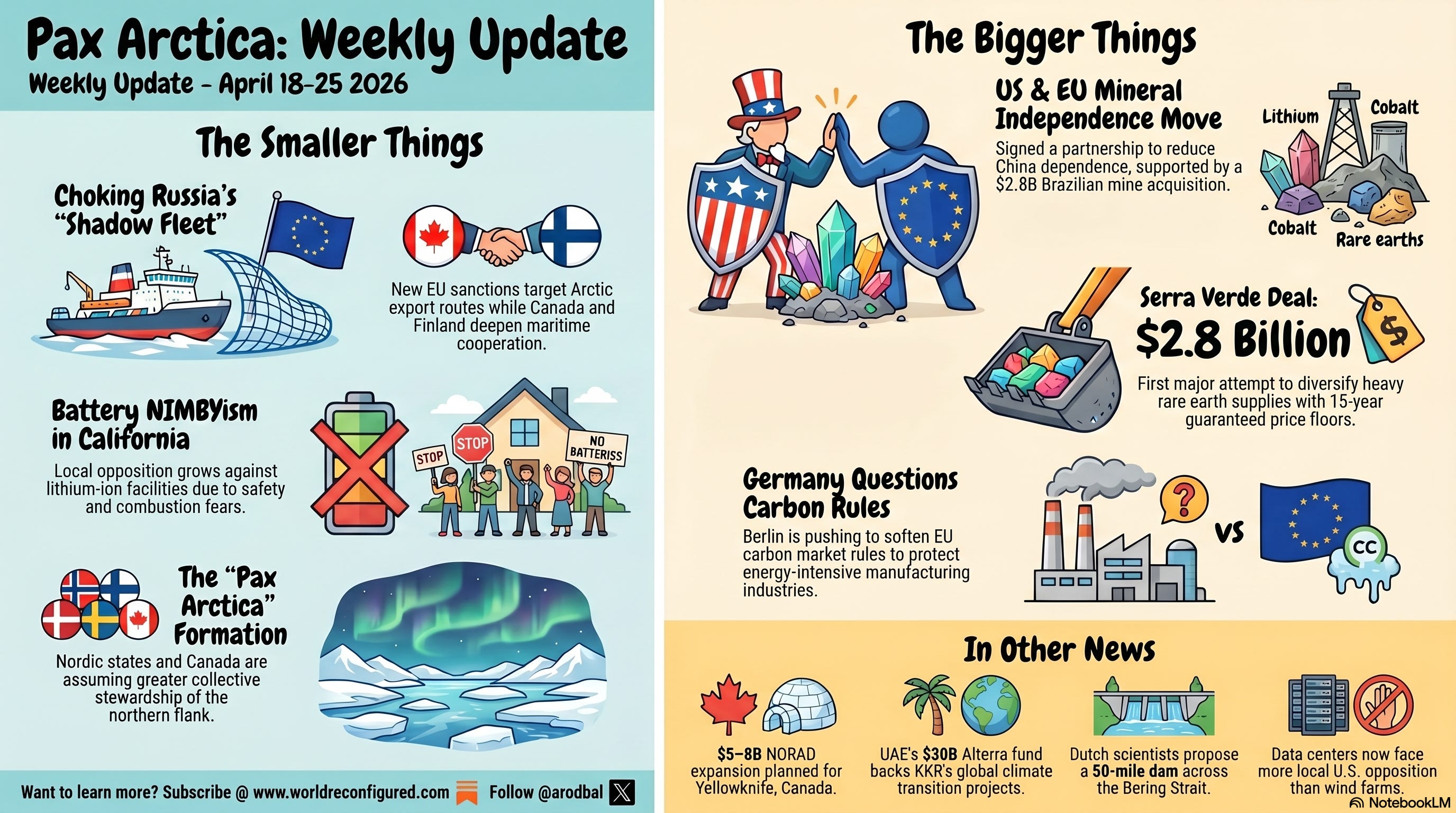
EU and US finally sign collab while USA Rare Earth nabs Serra Verde (drill baby drill in Brazil?)
Germany calls for weaker ETS and carbon market rules (“focus on industry” they call it)
The Smaller Things
Pax Arctica: Europe levies sanctions while Canada and Finland announce maritime collaboration (should I bring my icebreaker?)
Batteries are NIMBY’s latest obsession (I mean who wants to live next to a combustible facility anyway)
In Other News: Data centers are still unpopular, KKR gets lots of money from the UAE and more
The Bigger Things
The biggest stories you probably missed:
US and EU Signed Minerals MoU while USARE Buys Serra Verde
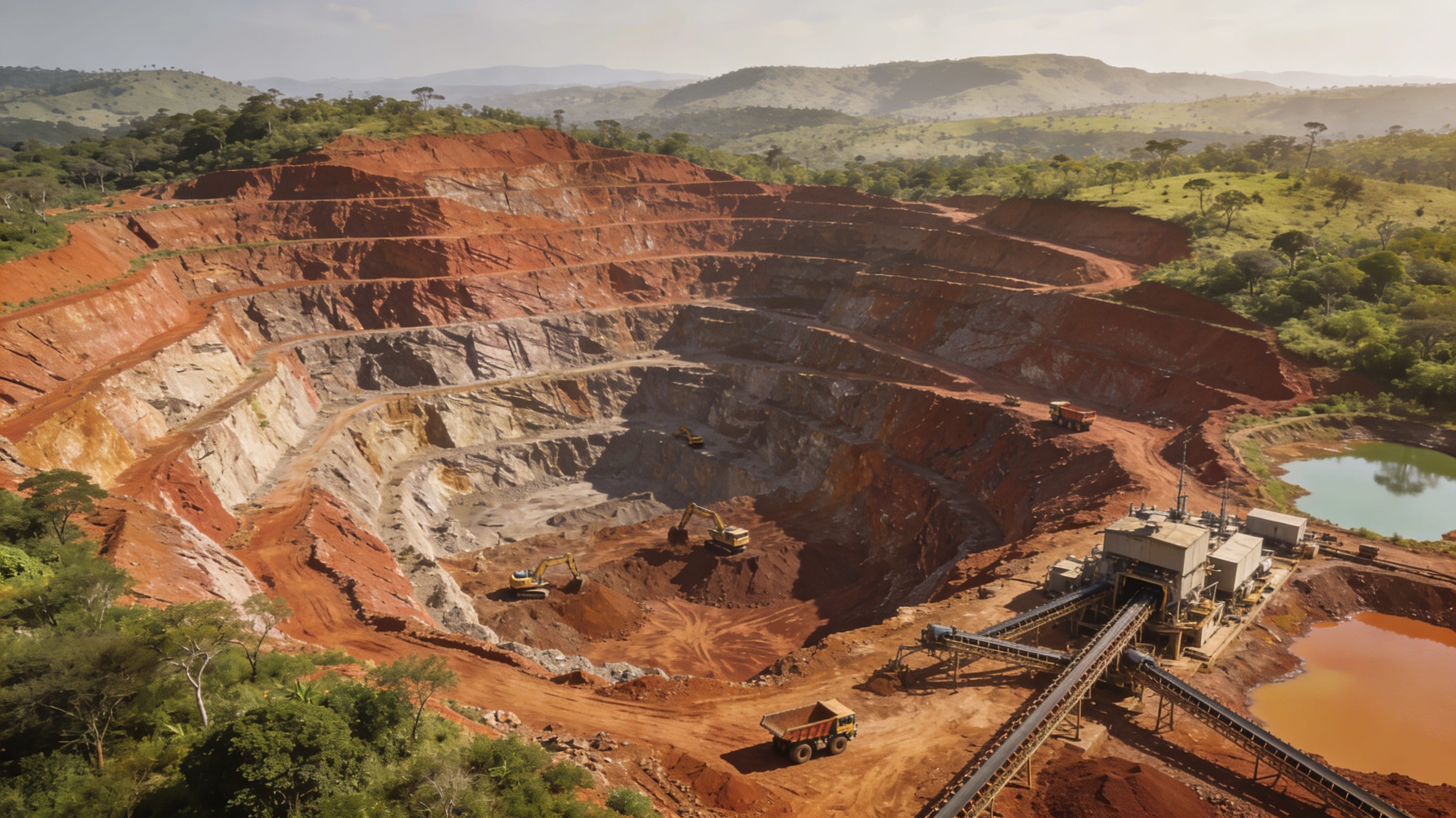
What Happened? The US and EU (finally) signed a minerals partnership this week, aimed at reducing dependence on China through exploration of mechanisms like offtake agreements and price floors.
At the same time, USA Rare Earth closed a $2.8 billion deal for Brazil's Serra Verde mine, backed by US government financing and a 15-year offtake with guaranteed minimum prices for rare earths.
Why Care? 🤷♂️ Because the EU-US deal is very much overdue, and is critical to overcoming China’s control over the market. The US and the EU are major buyers of permanent magnets and heavy users of critical minerals. Their market mechanism can help force China’s hand in trade negotiations and market practices.
Meanwhile, the Serra Verde deal is a big deal in fact. It seems like the deal mechanisms (price floors, offtakes) are becoming the new industry standard for large deals and we should expect to see more. This is also the first real attempt to diversify supplies away from China on heavy rare earths at a meaningful scale.
My Take: ✍️ Good news overall. Finally, we have meaningful supply AND demand attempts to lower China’s control over the minerals market. It’s another step towards mineral independence.
Germany Calls to Soften Carbon Market Rules
What Happened? With a major overhaul of the EU’s Emissions Trading System (ETS) just around the corner, Germany wants the next round of reforms to “put industry at the core,” arguing for looser benchmarks, a slower phase‑out of free allowances, and extra flexibility in the Market Stability Reserve so Europe hits its climate targets without hammering energy‑intensive manufacturers on costs.
Why Care? 🤷♂️ Because Germany’s plight shows the extent and depth of Europe’s climate dilemma: Skirt climate policies and miss out on targets, or remain on target at the expense of short-term competitveness. I’ve mentioned this dilemma here:

While the EU is trying to promote strict decarbonization policies, Europe itself is divided around the details: how much, when, for how long and at what cost. Every week you can find a piece of news that shows just how complex the landscape is. Germany, the EU’s biggest proponent and one of Europe’s strongest economies, is signaling to Brussels that it thinks the EU needs to take it down a notch.
My Take: ✍️ I don’t think this dilemma is going anywhere. If anything, the war in Iran and the disruptions to the Strait of Hormuz will only make Europe’s dilemma more pronounced. Europe will soon have to choose. And then choose again, and again and again.
The Smaller Things
The stories you should have on your radar:
Pax Arctica: Europe Targets Russian Shadow Fleet; Canada-Finland Maritime Deal

What Happened: Brussels released its 20th sanctions package, targeting Russia’s “shadow fleet” of oil and LNG tankers, adding dozens of vessels to the blacklist and choking off services to ships that keep Moscow’s Arctic export routes alive, while a new Canada‑Finland maritime pact quietly deepens icebreaking, shipbuilding, and naval cooperation along NATO’s northern flank.
Why Care? 🤷♂️ Because this is another sign of the bifurcated transformation of the Arctic: On the one hand, the quiet and bottom-up formation of Pax Arctica, as argued by Andreas Raspotnik:
The time has come for Canada and the Nordic states – Norway, Sweden, Denmark, Finland, and Iceland – to assume greater responsibility, stewardship, and active leadership in the Arctic as a region of shared exposure and shared agency
On the other hand, a hardened battle for hegemony that radiates into the Arctic, waged between Russia and Europe.
My Take: ✍️ It is worth noting that Europe is willing to strengthen sanctions even as it is feeling the impacts of the War in Iran on its energy market. Way to go Europe for the consistency!
NIMBY Sets Sights on Batteries
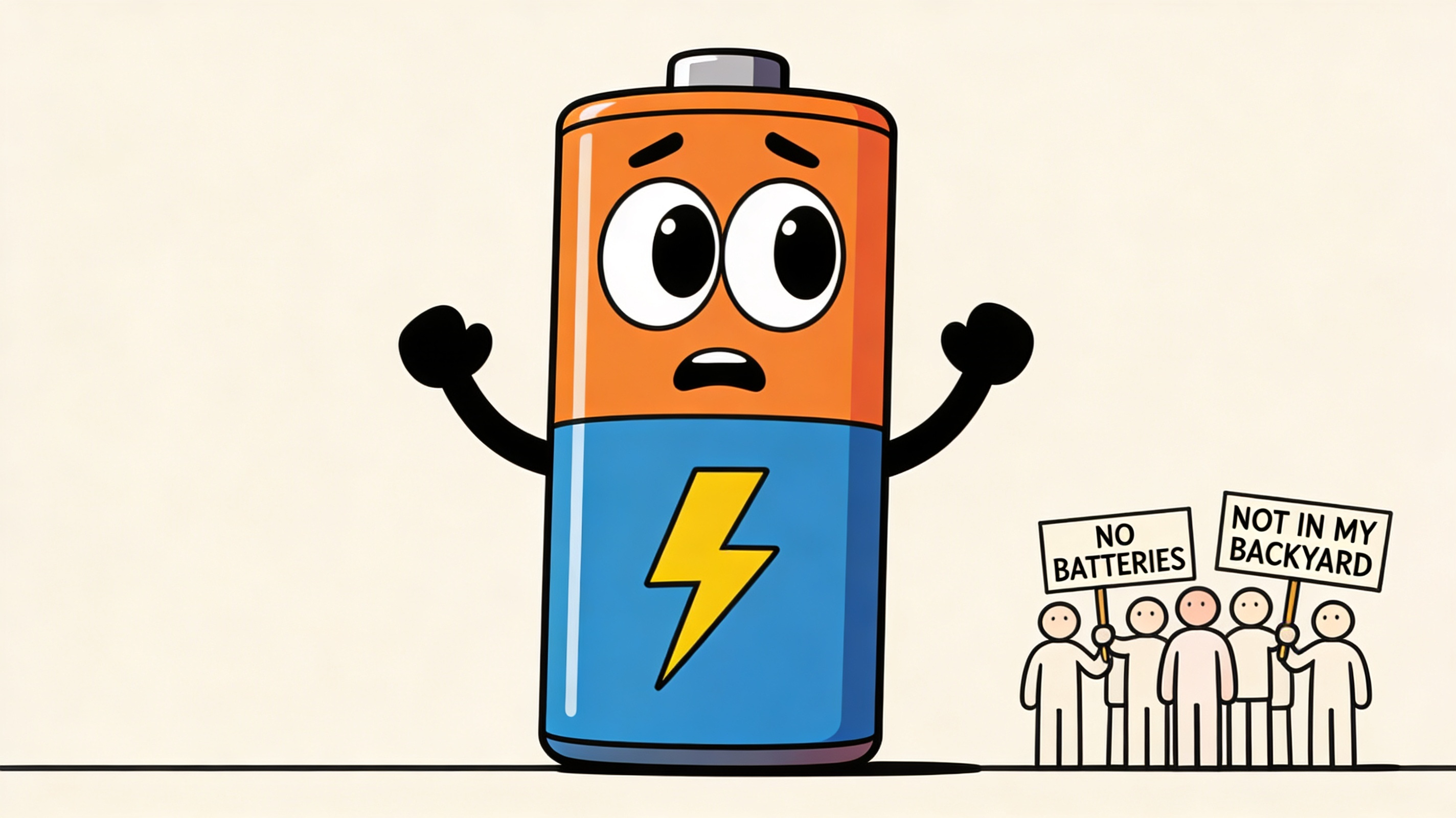
What Happened: While batteries and long-duration energy storage are becoming a more permanent feature of the US energy landscape, NIMBY opposition to them is growing. A new LA Times report shows that California is now ground zero for NIMBY oppoisition to batteries, mostly due to fears of living next to combustible lithium-ion facilities.
Why Care? 🤷♂️ Because this is part of the bigger battle for the soul of America, and whether that soul is made of renewables and Data Centers or not. It turns out that most renewable infrastructure - from solar to wind to batteries - is unpopular in the US, with many communities unwilling to have them in their backyards. And yes, with Data Centers it’s even worse. How this battle turns out will be of gargantuan consequences for the future of the US.
My Take: ✍️ Well luckily we now have Iron-Air batteries. Right?
In Other News:
📰 Canada's military plans $5–8B NORAD expansion in Yellowknife (do they want to fund my new arctic startup)
📰 UAE’s $30B Alterra climate fund backs KKR’s global climate transition fund, channeling blended finance into real-economy decarbonization projects (blended finance sounds cool)
📰 UK’s British International Investment launches £1.1B Asia energy-transition fund (I should transition to APAC)
📰 Dutch scientists propose 50-mile dam across Bering Strait to prevent AMOC collapse (where can we find that many beavers)
📰 AI-linked data centers now face more U.S. local fights than wind farms (maybe not a good time to announce my wind-powered data center)
Thanks for reading! If you enjoyed this edition, don’t forget to subscribe or share your thoughts. 🔽
See you next week!