



Happy Saturday!
Welcome to another edition of the Time Machine, the roundup on weekly stories that are too important to miss out on.
This edition will have less story-by-story recap, and more of a theme-driven roundup. Hope you like it! (you can always reach out to complain 🤷♂️)
TL;DR:
The Bigger Things:
Rare earths are now all the rage (and everyone has an opinion, myself included)
Everyone loves data centers, but no one wants to live next to one (do I need to buy new noise cancelling headphones?)
Renewables are… confusing (can everyone just make up their mind?)
The Smaller Things:
Trump trumps carbon shipping tax (I got nothing snazzy to say)
Lots of action in the carbon markets this week (can I now buy credits at the local bodega?)
Antarctica is at risk of becoming Greenland (I wouldn’t book travel just yet)
The Cooler Things:
You can use LLMs to change people’s minds on climate change (mind control also works)
Creator Spotlight:
Global Data Center Hub (your go-to place for anything data center related!)
The Bigger Things
The biggest stories you probably missed:
Rare Earths Are All The Rage
What Happened? Over the past few weeks, China and the US upped the ante in their latest battle of the trade war. It started with China tightening export controls over Rare Earth Elements (REEs), prompting Trump to retaliate with 100% tariffs on China.
It’s the geopolitical version of jousting, so to speak.

This latest round of jousting sent the world into a frenzy and led to a few developments: (1) the EU is trying to join the party and coordinate response with the US and other G7 countries; (2) the Pentagon mobilized to buy up to $1B of critical minerals to counter China; (3) Critical Metals secured $50M in funding for a Greenland REE project, suggesting the private market is not waiting around.
Why Care? 🤷♂️ Because this is shaking up the global economy, sending shockwaves throughout the nations. China’s move served as a wake-up call and mobilized other countries to try and break its stranglehold over REEs. If successful, such break can serve as a pivotal moment for the global economy.
(Stay tuned - I will cover REEs more in depth over the next couple of weeks)
Everyone Loves Data Centers, but No One Wants To Live Next to One
What Happened? From Florida to Australia, the data center boom continues. These computational giants continue to attract large-scale investments. At the same time, there is a growing pushback from both communities and state regulators in the US.
Just this week: (1) Microsoft cancelled its plans to build a data center in Racine, Wisconsin, thanks to local opposition; (2) Pennsylvania communities are pushing the state to restrict data center buildout, after several local wins; (3) 11 Governors threatened to leave PJM, the largest grid operator in the US, over data center related price surges.
Why Care? 🤷♂️Because it seems like everyone loves data centers, just not enough to want to live next to one. Whether noise pollution, rising energy prices, or water stress, there are plenty of reasons communities push back. This can prove problematic for the US economy, as much of recent growth depended on data center buildout.
Renewables Are… Confusing
What Happened? Renewables are giving mixed signals:
Just this week: (1) India announced tighter rules for renewables to protect its grid; (2) a fire in a Brazilian power substation raised concerns about hydroelectric power; (3) wind turbine maker Vestas has halted a new plant construction in Poland thanks to waning demand.
Meanwhile: (4) Apple and Amazon continue to bet big on renewables; and (5) renewables are booming in the US despite Trump’s policies.
Why Care? 🤷♂️ Because despite the headache I get from reading all the headlines, it looks like renewables aren’t going anywhere any time soon (and that’s a good thing in my opinion).
The Smaller Things
The stories you should have on your radar:
Trump Trumps Shipping Decarbonization
What Happened: The International Maritime Organization was set to approve a landmark Net-Zero framework that included a global carbon tax on shipping. The vote was delayed by a year, thanks to the Trump Administration to use tariffs, visa restrictions and other measures against countries that support the measure.
Why Care? 🤷♂️Because (1) global shipping is responsible for 3% of global emissions; (2) this is the first time these sanctions were used to block international climate actions; and (3) shows that climate diplomacy is not always towards climate action.
Carbons Markets are Reconfiguring
What Happened: Carbon markets are action-packed as of late: On the one hand, EU decided to delay new ETS rules, while a new audit reveals that 80% of credits coming out of a high-profile project are “bogus”.
On the other hand, Indonesia is back in the game and reopened its market to foreigners under new, more strict rules, and China is inching closer to a national platform for carbon trading.
Why Care? 🤷♂️ Because carbon markets are necessary to meet the Paris Agreement targets, yet they are rife with challenges and lack the transparency to create trust. Markets are still evolving, and it will take time until they are able to fill their important role in reaching Net Zero.
Antarctica Might Become Greenland
What Happened: Researchers are warning that Antarctica is starting to behave like Greenland. This means constant, self-sustaining ice melt, prompting researchers to caution we may have crossed a tipping point.
Why Care? 🤷♂️Before you go ahead and book travel to the icy kingdom, this is very bad news. Antarctica’s Greenlandification will have dire and systemic consequences, ranging from accelerated sea-level rise, disruption of global ocean circulation and changing weather patterns.
If you think insurance premiums are high now thanks to extreme weather, wait until Antarctica becomes Greenland.

The Cooler Things
Honestly it’s just too cool to miss out on:
You Can Change People’s Mind on Climate with GenAI

Ok I know people talk about how AI can be used for sustainability, but a new research takes the discussion to a whole new direction.
A new study in Nature Climate Change shows how large language models can actively shape how people think, feel, and act about climate change. When fed persuasive, evidence‑based wording, GenAI systems increased users’ belief in the scientific consensus and their willingness to take greener actions, like cutting meat consumption or supporting clean energy policies.
This means climate communicators should get with the times and learn how to use GenAI in a way that shapes public opinion (and at the same time, avoid looking like mind-controlling evil geniuses).
Creator Shoutout
Every week I’m going to highlight a writer/creator I am inspired by.
This week’s shoutout goes to:
Global Data Center Hub
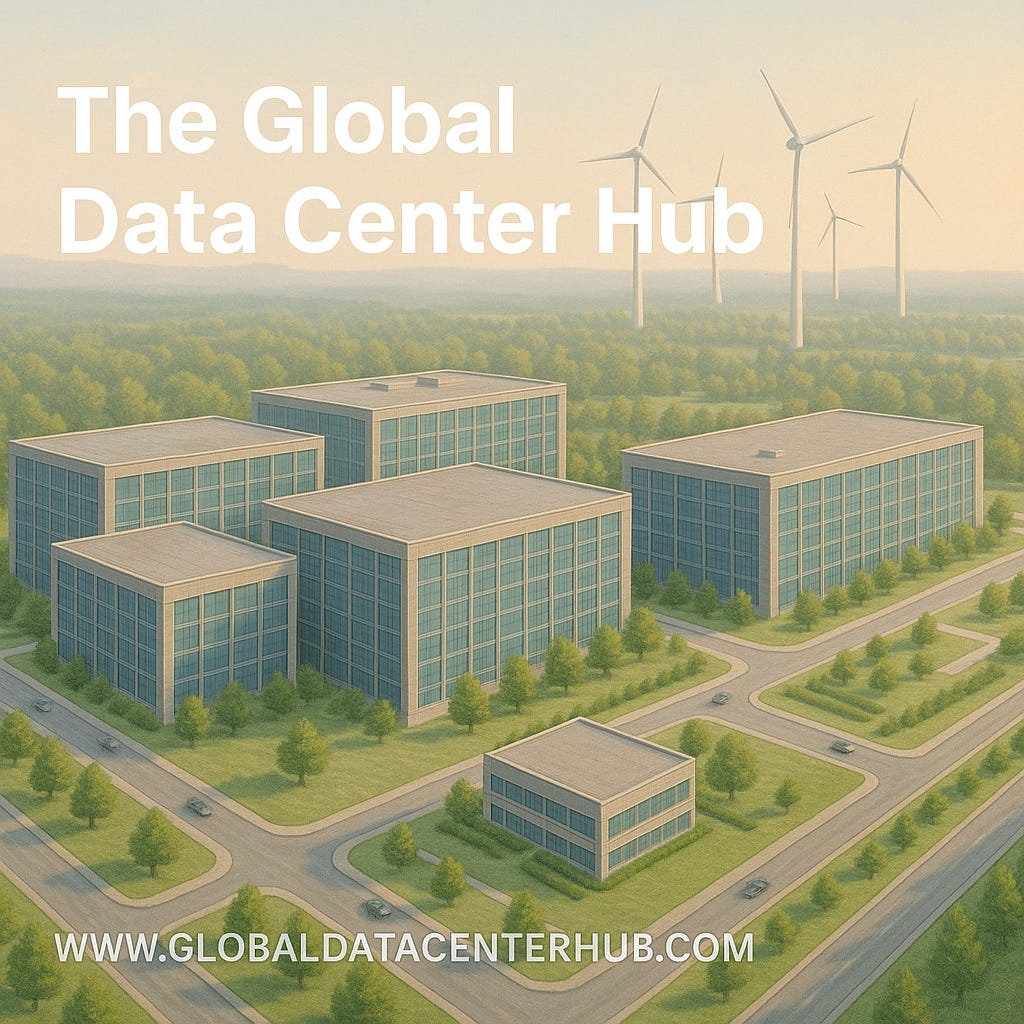
Obinna Isiadinso is by far my favorite author on the topic of Data Centers. In his publication, he chronicles the complex landscape of Data Centers. His writing provides thoughtful and deep analysis of the evolving data center landscape with dizzying frequency.
His writing helps readers understand:
The growing landscape of data centers
The evolving financial and operational models that underpin the industry
The players, their moves and what it means for our economy
Obinna’s writing is clear, crisp and easy to follow, as he breaks down complex topics with incredible simplicity.
Check it out!
Thanks for reading! If you enjoyed this edition, don’t forget to subscribe or share your thoughts. 🔽
See you next week!
Regarding the issue of data centers, what if distributed ledger technologies combined with advanced edge computing could entirely redefine our infrastructural needs, reducing the physical footprint and NIMBYism challanges associated with current large-scale operations?
Fun and informative as always. Quick question, “like cutting meat consumption or supporting clean energy policies.” — does my individual meat consumption really make any kind of a difference? Guess I’ll ask ChatGPT and see what it convinces me to do, but thought I’d also ask a real person to!